
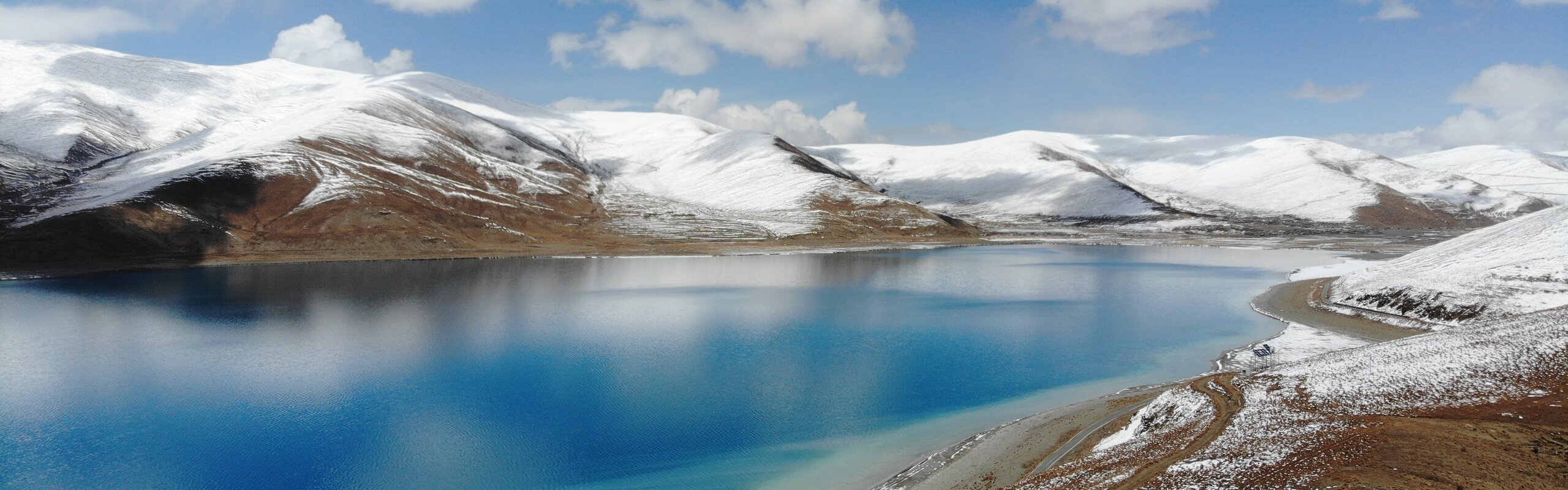

November is a good time to visit Tibet. The weather shifts from late autumn into early winter, bringing crisp, dry air and crystal-clear skies across most of the region. While temperatures drop, the cold is manageable in major cities like Lhasa, and the conditions are overall comfortable.
This is the low travel season, so you'll enjoy quieter sites, stunning visibility for mountain views, and low prices for transportation and good hotels.
Noted that some high-altitude areas, including Mount Kailash in Ngari, become too cold and are not suitable for travel in November.
Weather Averages in November
- Temperature range: -4 to 12℃ (25 to 54℉)
- Snowfall: 10 mm / 0.4"
- Snowfall days: 2 days
- Clear days: 24 days
- UV index: Very high
Climate Overview of Major Destinations

| Destination | Temperature range (°C/℉) | Clear days |
|---|---|---|
| Lhasa | −5 to 16 /23 to 61 | 25 |
| Shigatse | −7 to 14 /19 to 57 | 22 |
| Everest Base Camp | −11 to 9 /12 to 48 | 20 |
| Nyingchi | 4 to 18 /39 to 64 | 21 |
| Ngari | −14 to 2 /7 to 36 | 13 |
Lhasa, Shigatse, and Central Tibet enjoy mild, sunny days with temperatures reaching 10 to 16℃ under the sun. Nights drop below freezing, but there are usually no activities at night. With 25 clear days on average, you'll enjoy plenty of blue-sky weather for sightseeing.
The Everest region is colder with a few snowy days. Everest Base Camp sits at 5,200 meters, so temperatures can dip to -11℃ after dark. However, daytime conditions are manageable with proper layering, and the dry, stable weather gives you an excellent chance of seeing Mount Everest in full clarity.
Nyingchi is the warmest area in November, with daytime temperatures ranging from 14 to 18℃. The lower altitude (around 3,000 meters) and forested valleys create a milder climate. This is where you'll find Tibet's most vivid autumn colors still on display.
Namtso Lake begins to freeze in November, and snowfall can close roads unexpectedly. If you plan to visit, check road conditions in advance and be prepared for sudden weather changes.
Mount Kailash and Ngari are not suitable for travel in November. Temperatures plunge well below freezing day and night, heavy snowfall is common, and roads are often blocked.
Best Things to Do in November
November has clear, stable weather in Tibet. It's cold, but most major sites are quiet and comfortable to visit, and you can explore them at your own pace.
Below are the seasonal experiences we recommend for November.
Chase Autumn Colors in Nyingchi
November is the last chance to catch Tibet's autumn colors before winter arrives. While most of the plateau has turned brown and barren, Nyingchi's lower altitude and forested valleys let you enjoy autumn colors well into late November. We suggest visiting Basum Tso Lake and Lulang Forest near Bomi, these two places offer the best autumn scenery in the Nyingchi area.
Here, you'll see a side of Tibet that feels completely different from the high plateau you might expect. Lakes, snow peaks, and layers of autumn leaves come together in scenes that feel almost poetic, and the colorful foliage makes an ideal backdrop for photography.
Autumn in Basum Tso LakeThe dry, clear weather also makes this one of the best months to see Mount Namcha Barwa without clouds—you may even catch the rare "golden summit" at sunset.
Sunlit Golden MountainPlan at least 3 days for the Nyingchi area to enjoy the scenery without rushing. You can stay a few nights at the Lulang Resort Area, walk around freely, and experience autumn in Nyingchi at an unhurried rhythm. See our 7-Day Lhasa, Nyingchi, and Bome Tour for more details.
See Mount Everest at Base Camp
November is one of the best months to visit Everest Base Camp. The weather is dry and stable, with minimal precipitation and cloud cover, giving you an excellent chance of seeing the summit clearly. The low season also means fewer visitors, so you'll have more space to take in the view. You can check our 8-Day Lhasa to Everest Base Camp Tour.
Mount EverestAt Everest Base Camp, you may also catch the golden summit at sunset, and November offers one of the highest chances to see it. If you plan to wait for sunset, be sure to dress very warmly. Temperatures can drop sharply as the sun goes down, and the cold sets in fast.
Because cold nights and high altitude may cause severe altitude sickness, we do not recommend staying overnight inside the Everest Base Camp. Instead, stay in Tashizong (also called "Everest Town"), about 50 kilometers away, where accommodations are warmer and more comfortable.
Meet Wildlife on the Changtang Grassland
November is an excellent time to visit the Changtang Grassland in northern Tibet. This site is best suited for travelers who enjoy off-the-beaten-path experiences and don't mind long drives.
As winter approaches, wildlife becomes more active and easier to spot across the plateau. You'll spot rare high-altitude species like Tibetan antelopes, wild yaks, and kiangs (Tibetan wild asses), along with herds of domestic sheep, yaks, and horses.
In November, the grassland turns fully golden, the air feels sharp and thin, and the silence is striking. You'll pass through vast golden grasslands, rolling hills, and barren plains, and you'll feel like arrived on another plane, which is remote, mysterious, and immense. You'll experience one of the most remote and untouched landscapes on earth.
Changtang GrasslandWith our private car service and an experienced local driver, you can go through the Changtang Nature Reserve and return to Lhasa via the Namtso Lake.
Crowds and Costs
November is the low travel season in Tibet, which means you'll enjoy a much quieter and more affordable experience. Popular sites like the Potala Palace and Jokhang Temple have shorter queues, and you'll have more space to explore at your own pace.
Accommodation prices drop by 50% or more compared to peak season, and flights into Lhasa are often heavily discounted. Train tickets are also easier to book.
From November 1 to March 15, Tibet offers exceptional winter tourism discounts. All A-level scenic areas (except temples) offer free admission, including major attractions like Everest Base Camp and Namtso Lake. These make November one of the most cost-effective times to visit Tibet without sacrificing the quality of your experience.
What to Wear
Dressing in layers is essential in November. The weather is dry and sunny during the day, but temperatures drop sharply after sunset, and the wind can be strong at higher altitudes.
Base layer: Wear thermal underwear to keep warm, especially at night and in the early morning.
Mid layer: A fleece or down vest provides insulation without bulk.
Outer layer: Bring a windproof and waterproof jacket. At places like Everest Base Camp or Namtso, the wind can be biting, so a good shell is critical.
Accessories: Don't forget a warm hat, gloves, and a scarf. Sunglasses and high-SPF sunscreen are essential, as the UV index is very high year-round in Tibet, and the sun reflects off snow and ice.
Footwear: Wear sturdy, waterproof hiking boots with good ankle support. The ground can be icy or muddy, especially in the mornings.
If you're visiting Nyingchi, the lower altitude means milder temperatures, so you can dress a bit lighter during the day. But always keep a warm layer handy for evenings.
Altitude Sickness Risk
November's cold, dry air can make altitude sickness more noticeable. Your body takes in less oxygen in cold weather, and breathing feels harder, especially at high elevations like Everest Base Camp or Namtso.
Before heading to higher altitudes, we suggest spending at least two full days in Lhasa (3,650 meters). Avoid washing your hair, drinking alcohol, running or jumping for the first 2-3 days.
If you're sensitive to altitude or have concerns, choose lower-elevation destinations like Nyingchi, where the milder climate and lower altitude (around 3,000 meters) make acclimatization easier. We're happy to help you plan a route that balances adventure with safety.
Tibet Weather by Month
| January | February | March | April |
|---|---|---|---|
| May | June | July | August |
| September | October | November | December |
For a summary, see The Best Times to Visit Tibet.