

January is a good time to visit Yunnan if you prefer fewer crowds and a more relaxed travel experience, especially when exploring multiple cities in one trip.
What makes this month special is the variety: snow-covered mountains, lakes alive with migratory birds, and blossom while most of China is still deep in winter.
How Is the Weather in Yunnan in January?
Most areas are dry and sunny with very little rain, making January ideal for clear-visibility sightseeing and long outdoor days.
Kunming and Dali are mild during the day with cool mornings and evenings. Lijiang is slightly colder but offers clear skies for mountain views.
Xishuangbanna and Pu'er are the warmest, with tropical, summer-like daytime temperatures, presenting a sharp contrast to the rest of Yunnan in winter.
Shangri-La is much colder with snow and frost in higher areas. Jianshui and Tengchong remain mild and dry.
- Kunming-Dali-Lijiang: 4-16°C (39-61°F), little rain (1-5 days), occasional fog (2 days)
- Xishuangbanna-Pu'er: 13-26°C (55-79°F), little rain (1-2 days)
- Shangri-La: -8-8°C (18-46°F), no rain, occasional light snow (1–6 days)
- Jianshui-Tengchong: 4-18°C (39-64°F), little rain (1-2 days)
- Yuanyang: 9-20°C (48-68°F), little rain (1-2 days)
Places to Go in Yunnan in January
1. Kunming, Dali, Lijiang
These three cities string together Yunnan's most distinctive winter sights in one seamless route: lakeside gulls, snow-capped peaks, and cherry blossoms blooming out of season.
Flocks of red-billed gulls gather at Dianchi Lake and Erhai Lake, circling low over the water. Their cries echo across the lake, and they'll swoop down to take bread almost from your hand.

In Wuliang Mountain, thousands of pink and white cherry blossoms roll across tea plantations like a low cloud, forming the unique "green tea and red blossoms" landscape. Timing matters: by mid-January the blossoms fade, so early January is your window.
Winter is also when Jade Dragon Snow Mountain and Cang Mountain put on fresh snow. Dry air and clear skies mean crystal-clear visibility, which is a good chance to catch the "Golden Mountain" effect: first light turning snow peaks from silver to blazing gold in about 20 to 30 minutes.
We've timed every stop on our 7-Day Kunming, Dali, and Lijiang Winter Tour, so you walk into each scene at its peak — gulls, blossoms, and golden mountains included. Plus Naxi culture, Shaxi Ancient Town, and an itinerary that flexes around you.
2. Yuanyang
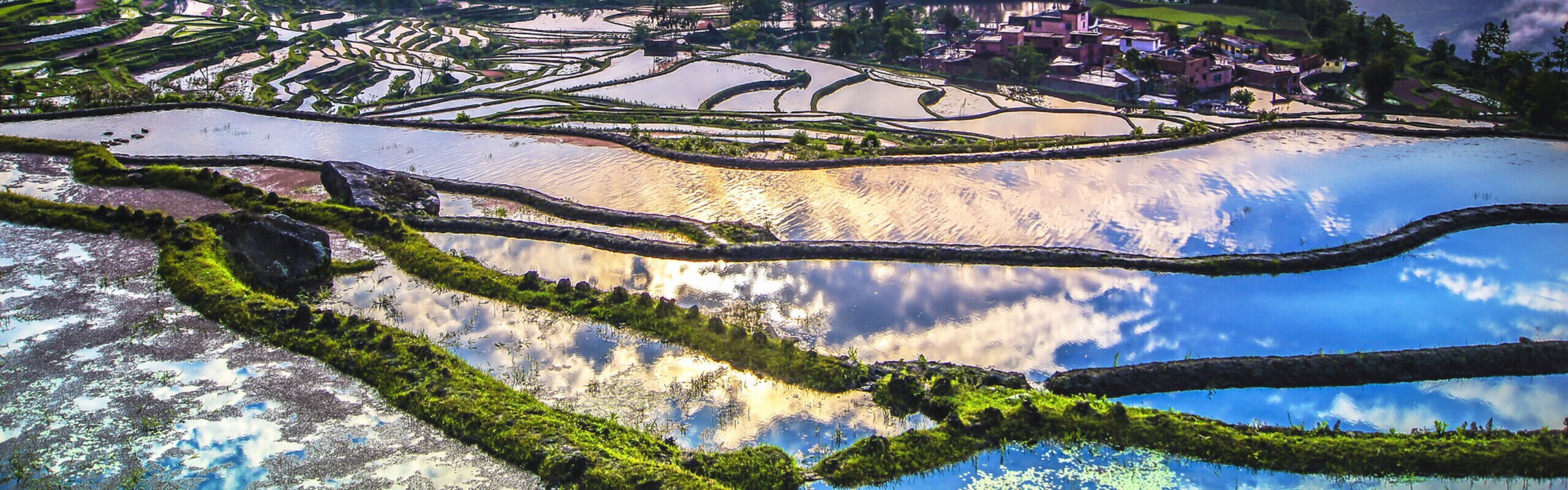
In January, the Yuanyang Rice Terraces enter their irrigation period. Water fills the fields and the terraced patterns become sharply defined across the slopes.
On sunny days, the terraces reflect the sky like a layered mirror, particularly vivid when light changes across different levels of the slopes at sunrise and sunset.
You can visit nearby Hani villages and try making traditional dipping sauce right in a family kitchen. These are genuine stories and meals shared by people who've lived with these terraces for generations. See our 6-Day Jianshui and Yuanyang Tour.
3. Tengchong
Winter is the perfect time to soak in a hot spring when you need to slow down. Step in and feel the heat rise from below as steam drifts up into cool mountain air.
Tengchong's pools are fed by volcanic geothermal heat. You may hear the hiss and gurgle of water heated underground before you even see the pools — a reminder that the earth here is alive.
One of the best choices is Angsana Hot Spring: nearly 40 outdoor pools set in lush greenery, with different sections for couples, family sections, and group-friendly spaces. After soaking, you can also relax in the sauna area or enjoy the children's play space, which enhances the overall experience.
If you'd like to explore more of western Yunnan beyond Tengchong's hot springs, our 7-Day Hidden Western Yunnan Wellness Escape combines geothermal wonders with volcanic landscapes, historic villages, and local experiences across three distinctive destinations.
4. Jingmai Mountain, Xishuangbanna
Pu'er and Xishuangbanna have Yunnan's best climate in January, being warm, comfortable, and perfect for exploring
Jingmai Mountain Ancient Tea Forest is the world's first tea-themed World Heritage site. In winter, sea clouds fill the valleys. Around sunrise and sunset, orange light spreads across the clouds and sky, especially a particularly atmospheric view.
We recommend the following locations for viewing the sea clouds:
- Mangjing Village: Best for sunset
- Manghong Village: Best for sunrise
- Jingmai Dazhai: Best for sunrise, less crowded than Manghong Village. There is a café where you can enjoy tea and coffee.
Extra Surprise:
On the way to Wengji, Wengwa, and Nuogan villages, you might also see the winter pink cherry blossoms on Jingmai Mountain, usually appearing between late December and late January.
In Xishuangbanna, you can visit Manting Park with its former Dai royal architecture and Buddhist temples, then eat your way through the Starlight Night Market, where lemongrass, chili, and grilled fish fill the air, and flavors range from sour, sweet, spicy, and savory at most stalls.
For families, there are rainforest walks, Wild Elephant Valley, the Tropical Botanical Garden, and Manzhang Village where kids try papermaking, fishing, and pottery.
Xishuangbanna is about a 40-minute high-speed train ride from Pu'er, making it easy to combine both destinations in one trip. See our 6-Day Xishuangbanna and Pu'er Tour.
What to Avoid
In Shangri-La, grasslands turn dry and pale, and the cold reduces travel comfort. If landscapes are your focus, this isn't the month.
It still works if you're after Tibetan cultural sites like Songzanlin Monastery or sunrise views at Meili Snow Mountain. But for most travelers, limited days are better spent elsewhere this time of year.
Nujiang shares similar conditions, with muted scenery and demanding road access.
What to Wear
Layered clothing works best. Yunnan's winter sun feels warm, but shade brings a chill, so bring both lighter and warmer clothes.
In Kunming, Dali, and Lijiang, sweaters or knitwear with a light coat are suitable. On sunny days, it can feel warm enough for dresses and photos. A down jacket is recommended for the evening.
Shangri-La requires thicker winter clothing, including down jackets, extra sweaters, and warmer trousers even during the daytime.
In Xishuangbanna and Pu'er, short sleeves and dresses are comfortable, while you'll need a thin outer layer at night.
Don't forget sunscreen, sunglasses, a hat, and moisturizer, as the sun is strong and the air is dry.
Let Yunnan Surprise You through China Highlights
Yunnan is a destination that rewards thoughtful travel planning, especially when you want to make the most of a longer journey. With a private trip, you can slow down and focus on what truly interests you.
Our Yunnan tours are designed to keep things flexible and personal, so you can explore comfortably without rushing. If you're ready to plan your own journey, feel free to contact us.