

In this guide, I'll show you the best months to visit Yunnan, highlight the unique seasonal experiences each time of year offers, and share practical weather tips. So no matter when you come, you'll always find something to look forward to.
Winter Is the Best Time to Visit Yunnan (Dec–Feb)
The main reason we recommend visiting Yunnan in winter is simple: this is when the region is at its most beautiful.
You'll also get to enjoy some of Yunnan's best seasonal highlights:
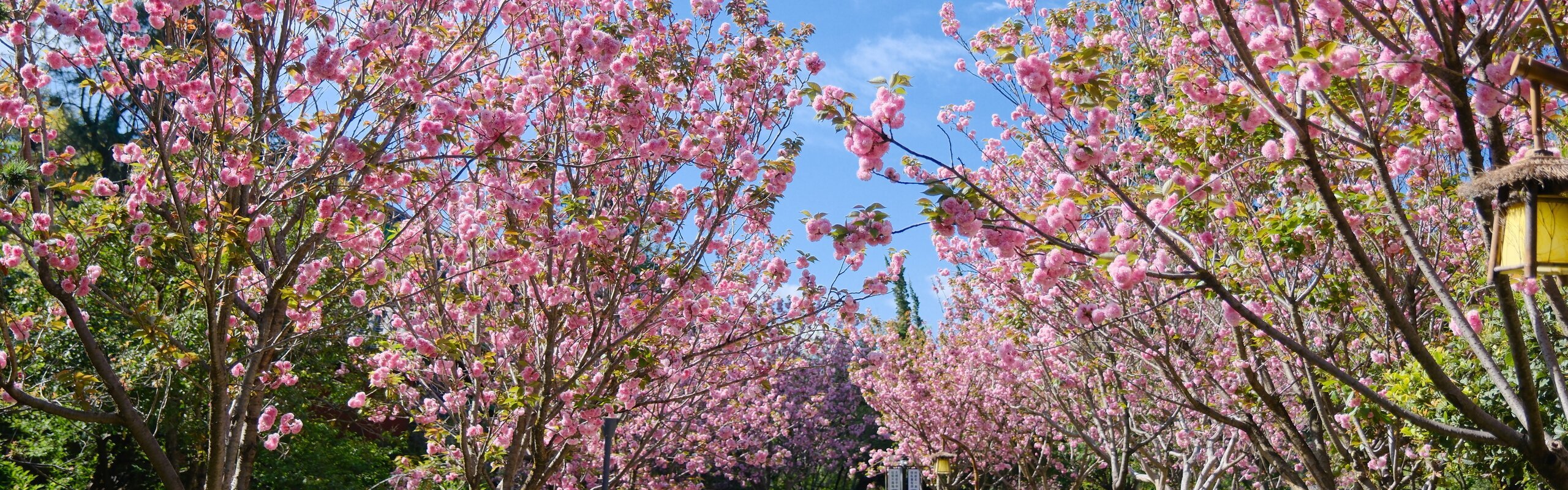
- Winter cherry blossoms: From mid-December to early January, the cherry blossoms in Wuliang Mountain are in full bloom
- Rapeseed flower fields: From late February to mid-March, Luoping turns into a sea of yellow flowers
- Snow mountains: Clearer skies mean more spectacular views—and a higher chance of seeing the famous "golden sunrise" on the peaks
- Hot springs in Tengchong: Available year-round, but especially relaxing in winter
- Seagull season: You can spot flocks of seagulls at Dianchi Lake and Erhai Lake
- Sea of clouds in Pu'er: Often visible almost every day
 Rapeseed flower fields in late February, Luoping
Besides that, you would enjoy good weather in the wintertime. From December to February, the weather is mostly sunny and dry, with very little rain (usually just 1–2 days per month). This means you'll see clearer lakes, greener forests, and sharper snow mountain views against blue skies.
Most of Yunnan is at its best, except for high-altitude areas like Shangri-La and nearby mountain regions.
Cherry blossoms are scattered across the fields.Another advantage is fewer crowds and better prices. Aside from the week of the Chinese New Year, winter is not a peak travel season in China, so you can enjoy a more relaxed experience.
Our 7-Day Kunming, Dali, and Lijiang Winter Tour will take you to experience the quiet beauty of Yunnan.
Our travel expert in White Horse Snow MountainWinter Temperatures by Region
- Kunming, Dali, Lijiang, Tengchong: 5–19°C (41–66°F)
- Shangri-La and nearby areas: -10–9°C (14–48°F)
- Xishuangbanna & Pu'er: 13–28°C (55–82°F)
- Jianshui & Yuanyang: 11–24°C (52–75°F)
Spring & Autumn: Also Great Times to Visit (Mar–May, Oct–Nov)
They come second to winter mainly because of more frequent rainfall.
Compared to winter, these seasons usually see around 5–15 days of rain per month:
- March, April, and November tend to be drier (about 5–10 rainy days)
- May and October are wetter, with around 10–15 rainy days
Choose March, April, or November if Possible.
Not only is the weather more stable, but you'll also enjoy some great seasonal highlights:
- In Kunming, cherry blossoms bloom at Yuantong Mountain from March 1–20. In April, jacaranda flowers turn Jiaochang Middle Road into a sea of purple
- Dongchuan Red Land is at its most colorful
- In Pu'er, you can still catch the sea of clouds
- Xishuangbanna hosts the lively Water Splashing Festival in April
- In Tengchong, you can see golden ginkgo forests from mid to late November (timing may shift slightly depending on the rainy season)
Check out our 9-Day Yunnan Highlights with Spring Blossoms Tour. Step into a world of color.
Jacaranda flowers in April's KunmingDongchuan Red LandSpring Weather (Mar–May)
- Kunming, Dali, Lijiang: 9–24°C (48–75°F)
- Shangri-La and nearby areas: -2–15°C (28–59°F)
- Xishuangbanna & Yuanyang: 32–40°C (90–104°F)
- Pu'er, Jianshui, Tengchong: 14–28°C (57–82°F)
Autumn Weather (Oct–Nov)
- Kunming, Dali, Lijiang: 10–20°C (50–68°F)
- Shangri-La and nearby areas: -2–13°C (28–55°F)
- Xishuangbanna, Pu'er, Yuanyang: 18–29°C (64–84°F)
- Jianshui & Tengchong: 14–22°C (57–72°F)
Our clients travel in Lijiang in mid-April.Summer (Jun–Sep): Not Ideal, but Still Worth It
From June to September, Yunnan enters its rainy season. Most areas experience 20–25 days of rain per month, usually in the form of showers, with occasional fog (around 4–5 days).
The Stone Forest under the cloudy skyThe weather during this time can be unpredictable—even forecasts aren't always reliable. You might get short showers with sunshine in between, several days of continuous rain, or even a few completely clear days.
Because of this, flexibility is key. If you're traveling during this period, it's best to prepare a few backup plans so you can adjust your itinerary based on the weather and still make the most of your trip.
If you'd rather not plan around the weather yourself, we're here to help. Our guides adjust the itinerary in real time based on daily conditions, their local experience, and your preferences—so you can travel smoothly no matter what the weather brings.
See our 8-Day Classic Yunnan Tour. It's perfect any time of year. If you'd like to add activities or adjust the itinerary, just let us know.
So, what can you experience if visiting Yunnan in summer?
Although it's the rainy season, summer is actually a great time to visit Yunnan to escape the heat.
It's also wild mushroom season. You can enjoy the freshest and most flavorful mushroom hot pot of the year. Ingredients go straight from the mountains to your table (outside this season, they're usually dried or frozen).
If you're curious about Yunnan's famous wild mushrooms—even the poisonous ones—and how to tell them apart, we can also take you to a local market, where you'll see the widest variety at their freshest.
Summer Weather
- Kunming, Dali, Lijiang: 15–25°C (59–77°F)
- Shangri-La and nearby areas: 8–20°C (46–68°F)
- Xishuangbanna & Pu'er: 23–32°C (73–90°F)
- Jianshui & Tengchong: 20–30°C (68–86°F)
- Yuanyang: 32–37°C (90–99°F)
What to Avoid
1. Shangri-La is not recommended from December to February. It can be very cold, with a higher risk of altitude sickness.
The grasslands turn dry and yellow, and the scenery is less appealing—unless you're specifically going to see the "golden sunrise" on the snow-capped mountains.
2. Yuanyang is best avoided from April to September, when temperatures can rise close to 40°C (104°F).
3. Xishuangbanna is not ideal from April to May, as temperatures can reach 37–38°C (99–100°F).
4. During the rainy season, it's best to avoid high-altitude hikes, such as Tiger Leaping Gorge, Gaoligong Mountain, and Yubeng, as trail conditions can be affected by rain.
5. Nujiang is not recommended in winter and summer, as road conditions can be unstable.
FAQs
1. Which month has the best weather?
November–December and March–April offer the most pleasant weather. You'll get plenty of sunshine with very little rain.
November–December may see less rainfall than March–April.
March–April are warmer and more comfortable. Light long sleeves or a thin jacket are enough, while in November–December, you'll likely need a hoodie or a sweater with a coat.
2. Which month is the most beautiful?
December and February–March are the most visually rewarding months.
- December: winter cherry blossoms begin to bloom
- February–March: a wider range of seasonal scenery, including spring blossoms and vast rapeseed flower fields
3. When is Yunnan the most crowded?
Peak travel times in Yunnan include:
- Major holidays such as Chinese New Year, Labor Day (May 1-5), and National Day (October 1-7)
- School summer holidays in July and August
4. Which month do we recommend the most?
- For the best scenery and sunny weather: December and March
- For good weather and fewer crowds: November and September
- For summer travel (avoiding peak crowds): June
If you're planning a family trip to Yunnan, our 8-Day Yunnan Family Tour could be a great option.
Yunnan Travel Calendar
| Month | Weather | Best to See | What to Avoid |
|---|---|---|---|
| January | Cool & dry overall; warm in the south, cold in Shangri-La | 1. Yuanyang (mirror rice terraces) 2. Tengchong (hot springs) 3. Dali (seagulls + snowy Cangshan) 3. Kunming (mild winter, Dianchi seagulls) 5. Lijiang (snow mountains) 6. Xishuangbanna & Pu'er (warm + sea of clouds) |
1. Nujiang (unstable road conditions) 2. Shangri-La (very cold, limited scenery) |
| February | Dry season continues; great visibility | 1. Luoping (rapeseed flowers) 2. Yuanyang (terraces) 3. Lijiang (snow mountains) 4. Tengchong (hot springs) 5. Xishuangbanna & Pu'er (best climate) |
|
| March | Spring begins; flowers blooming, light rain | 1. Kunming (cherry blossoms) 2. Luoping (end of flower season) 3. Dongchuan Red Land 4. Xishuangbanna & Pu'er (best climate) |
|
| April | Warm with light rain; flowers blooming | 1. Dali (wheat fields + flowers) 2. Kunming (jacaranda bloom) |
Xishuangbanna & Yuanyang (hot and humid) |
| May | Start of rainy season; lush landscapes | 1. Shangri-La (early azaleas) 2. Kunming (jacaranda bloom) 3. Dongchuan Red Land 4. Jinping Butterfly Valley |
|
| June | Rainy season; vivid greenery | 1. Shangri-La (alpine flowers) 2. Lijiang (Tinghua Valley in bloom) 3. Mile (lavender fields) |
1. Yuanyang (hot and humid) 2. Tiger Leaping Gorge & Yubeng (not ideal for hiking) |
| July | Cool summer escape; frequent rain | 1. Puzhehei (lotus flowers) 2. Lugu Lake (flower season) 3. Kunming–Dali–Lijiang–Shangri-La (cool weather + mushroom season) |
1. Tiger Leaping Gorge & Yubeng (not ideal for hiking) 2. Nujiang (rainy season, potential landslides) |
| August | |||
| September | Rain eases slightly; still green | 1. Shangri-La (wildflowers) 2. Dongchuan Red Land |
Tiger Leaping Gorge & Yubeng (not ideal for hiking) |
| October | Mixed weather; improving conditions late in the month | 1. Shangri-La (plateau scenery) 2. Pu'er & Xishuangbanna (best climate + clouds) |
|
| November | Dry season returns; clear skies | 1. Tengchong (ginkgo season) 2. Dongchuan Red Land 3. Pu'er & Xishuangbanna (warm escape) |
|
| December | Cool & dry; best for winter escape | 1. Xishuangbanna & Pu'er (warm escape) 2. Yuanyang (terraces) 3. Dali (cherry blossoms) 4. Kunming (seagulls) 5. Tengchong (hot springs) 6. Lijiang (snow mountains) |
Customize Your Yunnan Tour
We are ready to solve the problems of planning a complex trip in an unfamiliar region for you, helping to save you time and effort while ensuring that your travel needs and desires are met.
You can get more ideas on our Yunnan Tours. All of our tours can be adjusted/customized based on your requirements. Just contact us to customize your trip.