
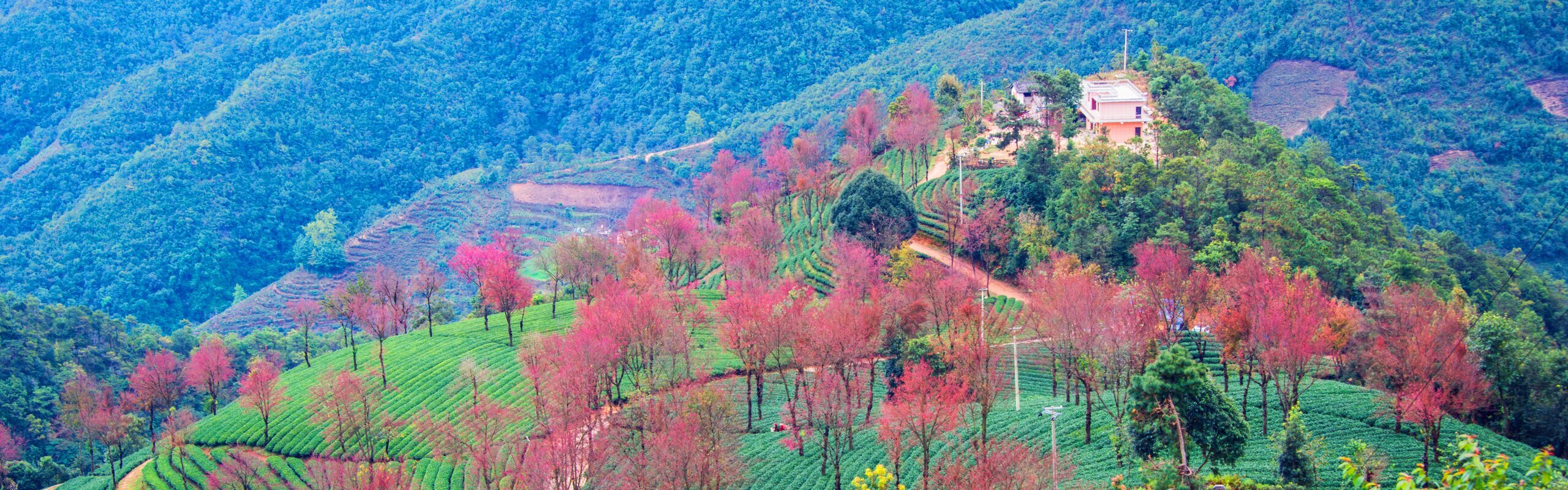

Yunnan in March is not a destination with uniform, predictable weather where you can travel comfortably everywhere without thinking; instead, it is a "multi-climate mosaic" destination.
Its real value lies in the natural contrasts across different elevations, where spring blossoms, lakes, and snow-capped mountains can be experienced within a single trip.
At the same time, March generally does not bring prolonged periods of severe weather, so with a well-planned itinerary and balanced pacing, it is a very good travel window to experience the diversity of Yunnan.
Content Preview
Think of Yunnan in Three Climate Zones Instead of One Weather Forecast
Most travelers expect one answer when they search for "Yunnan weather in March": Is it spring yet?
The answer is yes—but only if you first decide which part of Yunnan you're talking about.
March is one of the few times of year when different parts of Yunnan feel like completely different seasons.
Early Summer Feel (16–31°C / 61–88°F)
- Xishuangbanna & Pu'er
Southern Yunnan has already left winter behind. Days are warm to hot, rainfall is minimal (usually fewer than two rainy days throughout the month), and lightweight clothing is comfortable for most outdoor activities.
Best if you prefer: warm weather, tropical scenery, and spending long hours outdoors without worrying about the cold.

Classic Spring (8–25°C / 46–77°F)
- Kunming · Dali · Lijiang · Yuanyang · Jianshui · Tengchong
This is the version of March that most people imagine when they think about spring in Yunnan—mild afternoons, cool mornings, and relatively dry weather.
Within this zone, each destination still has its own character:
- Kunming offers the most stable spring weather.
- Dali has similar temperatures but is often breezier, especially around the lake.
- Lijiang stays cooler because of its higher elevation, with noticeably larger day-to-night temperature swings.
- Yuanyang and Jianshui are generally warmer and ideal for outdoor exploration.
- Tengchong remains comfortable, with occasional light rain and mist adding to the landscape rather than disrupting travel.
For most travelers, this is the easiest climate zone for sightseeing, walking, and exploring at a relaxed pace.
Late Winter Feel (−2–12°C / 28–54°F)
- Shangri-La
While much of Yunnan has already entered spring, Shangri-La still feels much closer to late winter.
Temperatures often range from −2°C to 12°C (28–54°F), with around ten days of light rain or snow during March. Sunny afternoons can feel pleasant, but mornings, evenings, and higher viewpoints remain cold enough for winter clothing.
If snow-covered mountains are part of the experience you're looking for, this is also the climate you'll need to be prepared for.
Where to Go in March in Yunnan
Option 1: Kunming → Dali → Lijiang → Shangri-La
For a first trip to Yunnan, this is the route we most often recommend.
It brings together the province's most iconic landscapes in one journey, especially in March, when spring is just arriving in the lower valleys while snow still remains on the higher mountains.
You move from Dali and Lijiang's ancient towns—where the weather is already warm enough for slow outdoor exploration—to cherry blossoms in Yiliang Cherry Blossom Valley, where the hills turn soft pink between early and mid-March.
Blooming trees bring spring life to Dali Ancient Town in March.Then the journey continues upward to Shangri-La, where winter still lingers in the air, creating a sharp and memorable contrast with the spring scenery earlier in the trip.
It's this contrast—spring and late winter within the same journey—that makes March one of the most rewarding times to travel in Yunnan.
Explore Yunnan's contrasting landscapes through our 9-Day Yunnan Spring Tour.
Option 2: Kunming → Luoping → Yuanyang → Jianshui
This route is designed around landscapes that are at or near their seasonal peak in early spring, rather than well-known landmark stops.
In Luoping, you witness vast rapeseed fields at their most vibrant stage of the year, when the yellow plains stretch across the horizon.
In Yuanyang, instead of simply viewing the terraces from observation platforms, we take a different approach.
We guide you into the landscape itself—through gentle walking routes that connect forest, village, terraces, and water systems in a continuous cycle.
Along the way, you begin to understand how the Hani people have shaped and lived within this environment for centuries, turning farming into a living ecological system.
In Jianshui, the pace slows again. Historic streets, courtyard homes, and traditional workshops offer a quieter ending to the journey, where local life continues at its own unhurried rhythm.
If you'd like to explore Yunnan at its most seasonal and least conventional, feel free to contact us. All our itineraries are fully customized.
Option 3: Xishuangbanna → Pu'er
This is Yunnan at its warmest and most relaxed side—when much of East Asia is still only beginning to feel spring.
If your idea of a holiday is slow mornings, light clothing, and long hours outdoors, southern Yunnan offers a completely different rhythm from the north.
In Xishuangbanna, life feels close to the tropics. You move through Dai villages, open-air markets, and riverside towns where daily life unfolds at an unhurried pace.
From there, the journey continues to Pu'er, where tea becomes the landscape itself. Rolling plantations, mountain mist, and centuries of tea culture shape the surroundings. It's less about "visiting tea farms" and more about understanding how tea defines the way people live here.
We design this 6-Day Rainforest Fun with Plants and Animals Tour around tropical landscapes in Xishuangbanna and tea culture in Pu'er—two experiences that define southern Yunnan.
How to Plan Around March Weather
1. Don't Rely on a Single City's Forecast When Packing
In March, you may experience warm sunshine during the day, but cooler mornings and evenings, especially if your itinerary includes higher-altitude destinations like Lijiang or Shangri-La.
Because of these shifts, a layering system works best—it allows you to adjust throughout the day without carrying heavy clothing everywhere.
As a simple guide:
- Above 25°C (77°F): T-shirts and lightweight clothing are usually comfortable.
- 15–25°C (59–77°F): Long sleeves with a light jacket or windbreaker are ideal.
- 10–15°C (50–59°F): A thicker jacket or fleece layer becomes more comfortable, especially in the morning and evening.
- Below 10°C (50°F): A lightweight down jacket is recommended, particularly if your itinerary includes Lijiang or Shangri-La.
If your trip covers several regions, it's completely normal to pack for more than one of these temperature ranges.
2. Build Your Trip Around March's Seasonal Highlights
March isn't just about pleasant weather—it's also when many of Yunnan's most seasonal landscapes come together.
Instead of only visiting famous attractions, leave room for experiences that are only available during this short spring window.
For example, you can:
- Make fresh flower cakes in a rose garden beneath Cangshan Mountain.
- Visit Yiliang Cherry Blossom Valley or the cherry blossoms around Dali University.
- See peach blossoms around Lashihai.
- Enjoy the rapeseed flowers in Luoping before the blooming season ends.
These seasonal experiences often become the moments travelers remember most because they simply aren't available for much of the rest of the year.
3. Instead of Avoiding Temperature Changes, Plan Your Day around Them.
In most destinations, mornings before around 9:00 a.m. are noticeably cooler. By late morning, the sun has warmed the air, making outdoor sightseeing much more comfortable. This pleasant period usually lasts until late afternoon before temperatures begin to drop again.
A comfortable daily rhythm could look like this:
- Morning (before 9:00): Enjoy breakfast, travel between destinations, or take a scenic drive.
- 10:00 a.m. – 5:00 p.m.: Visit lakes, ancient towns, gardens, or hiking areas while temperatures are at their most comfortable.
- Evening: Choose indoor activities such as local performances, museums, hot springs, cafés, or relaxed dinners after the temperature drops.
Crowds and Costs
Compared to peak travel seasons in Yunnan (such as the National Day holidays), the number of tourists in March is generally lower.
In terms of costs, March is not a peak season, so flight tickets, hotels, and travel services are generally more affordable.
If you're looking for a month with fewer tourists, beautiful scenery, and reasonable prices, March could be a good option.
Travel Yunnan with China Highlights
March is when Yunnan shows its most layered side—snow still lingering in the mountains, flowers beginning to open in the valleys, and different regions entering spring at their own pace.
There is no single "best route" for everyone. Some journeys are about iconic highlights, others are about seasonal contrast or slower immersion into local life.
What we do is help you choose the version that actually fits how you want to travel.
If you already have a rough idea of your travel time or interests, we can shape it into a March itinerary that feels balanced, comfortable, and personal to you.
Feel free to contact us to start planning your March trip to Yunnan.